Showing posts with label oil spill. Show all posts

Friday, July 16, 2010

Mayday


Waveland, MS

“This sucks, man,” says Matthew May as he surveys the oil on the formerly pristine beaches of Waveland. “And it stinks, too.” May, who moved to Mississippi from Chicago in 1986 to join family here, has just returned from a trip to the windy city. He’s collected a mess of tar balls on a piece of wood, careful not to touch the toxic goop.

It’s the first he’s seen of the oil, although he found mullet carcasses on the beach three weeks after the Deepwater Horizon exploded. “And let me tell you,” he says, “nothing kills mullets.”

A car mechanic by profession, May’s passion is fishing.  He used to spend every weekend on the gulf waters, which he considers to have some of the best shark fishing anywhere. Now his hobby is spoiled. He’s also one of a growing population in the community not working directly with oil or seafood who nonetheless is suffering reverberations from the spill. “Nothing’s going on here,” he says, “It’s dead.”

He eyes the clean-up crews down the beach. They close up their tents as the workday ends, and claim they didn’t find much oil today. “They’re picking up garbage,” he says with disgust. “But it’s not the trash we’re worried about.”

 
-Claire Layrisson
 
 Photos: Claire Layrisson

Thursday, July 15, 2010

Life's a Beach


Waveland, MS

The beaches of Waveland, Mississippi, are closed right now, but that doesn’t stop Wayne Newman and his wife, Sheena, from setting up their umbrella and chairs on the sands to gaze at the waters of the gulf each day. “It’s a soft closing,” Wayne explains, meaning that no one will be thrown off the beach, although caution is advised.

The beaches look different than they did when the couple moved from Kentwood six years ago after Wayne was transferred for work. Tar balls and booms now spoil the view, and the Newmans are alone out here save the clean-up workers. “But we’re going to stick around. We love it,” Wayne says, which is obvious – they closed on their house across the road just two days after Hurricane Katrina. He adds, “It’s not the beach or the sand’s fault.”

Dead fish floated ashore way before the oil showed up.  “I buried them in the sea oats because I’m part Indian,” he says. “That’s just what Indians do.” He’s dismayed at the slow pace of the cleanup crews– “they’re twenty minutes on, twenty minutes off” - and he reports broken boom and keeps his eye out. “Obama said he’d get more jobs for the community. I didn’t think it would be this way.”

Wayne has experience with oil companies. He worked offshore for three years, and his father retired from a position with Transocean right before the spill. He blames the disaster on big money and corruption, but doubts BP or the government will be able to clean up the mess. “There’s only so much man can do,” he says. “This one’s for Mother Nature up above.” He thinks maybe a hurricane will slosh all the oil away, or bring it onshore where it can be cleaned up.

An employee at the Waveland Wal-Mart, Wayne tried to buy a British flag there the other day, but the mega-chain doesn’t sell them. “I wanted to fly it half mast, with the American flag on top,” he says.


-Claire Layrisson


Photos: Claire Layrisson

Thursday, July 1, 2010

Tuesday, June 29, 2010

A Day on the Docks


Venice, LA
June 25, 2010


It’s a hot afternoon on the crowded docks of the Venice Marina. To kill time, boat owner Rennie Buras and his crew cut up and laugh while waiting with the other boats, all packed with boom and oil mops, for the green light from BP to set off for Grand Isle to help with the clean up. 

The guys tell me BP makes everyone take tests before shipping out, which sounds reasonable enough to ensure safety. But the questions  - True or false, if you get dizzy, drink water? True or false, if it looks like your hand might get pinched, should you move it? -  seem ludicrous to veteran fishermen.  And half the fishermen speak only Vietnamese and don’t understand the questions in the first place, so the proctor issuing the exam finally screams the correct answer!


BP’s work instructions also seem silly to the men. Work 20 minutes, rest for 40. Don’t lift more than 40 pounds. Child’s play for these pros. 

They’ve been ready since Tuesday. It’s Friday and still they wait. Three men will live and work on this boat for the next three weeks. It’s tight—three bunk beds, a sink and a stovetop, but no one complains about the close quarters, only that the whole process is so disorganized and slow. BP promised to provide food and supplies, but as the wait drags on two of the fishermen make last minute runs for more cigarettes.

A shrimper on the docks tells me that it was slow after Hurricane Ike but that the season after Katrina was one of his best. This season was shaping up to be great too. Now he and his son, an oysterman, are both working for BP as boat captains in the cleanup effort. He’d rather be shrimping, but wants to get what he can from BP while it lasts. Who knows, he wonders, BP may quit paying, they may go bankrupt. Also, while the clean up work may last six months or 
longer, who knows when fishing will begin again. For now, he’ll start saving for the time after BP’s gone and no one’s paying lost wages. And, of course, keep on waiting. 
-Mary Clayton Carl


Monday, June 28, 2010

Empire Falling


Empire, LA

June 10, 2010


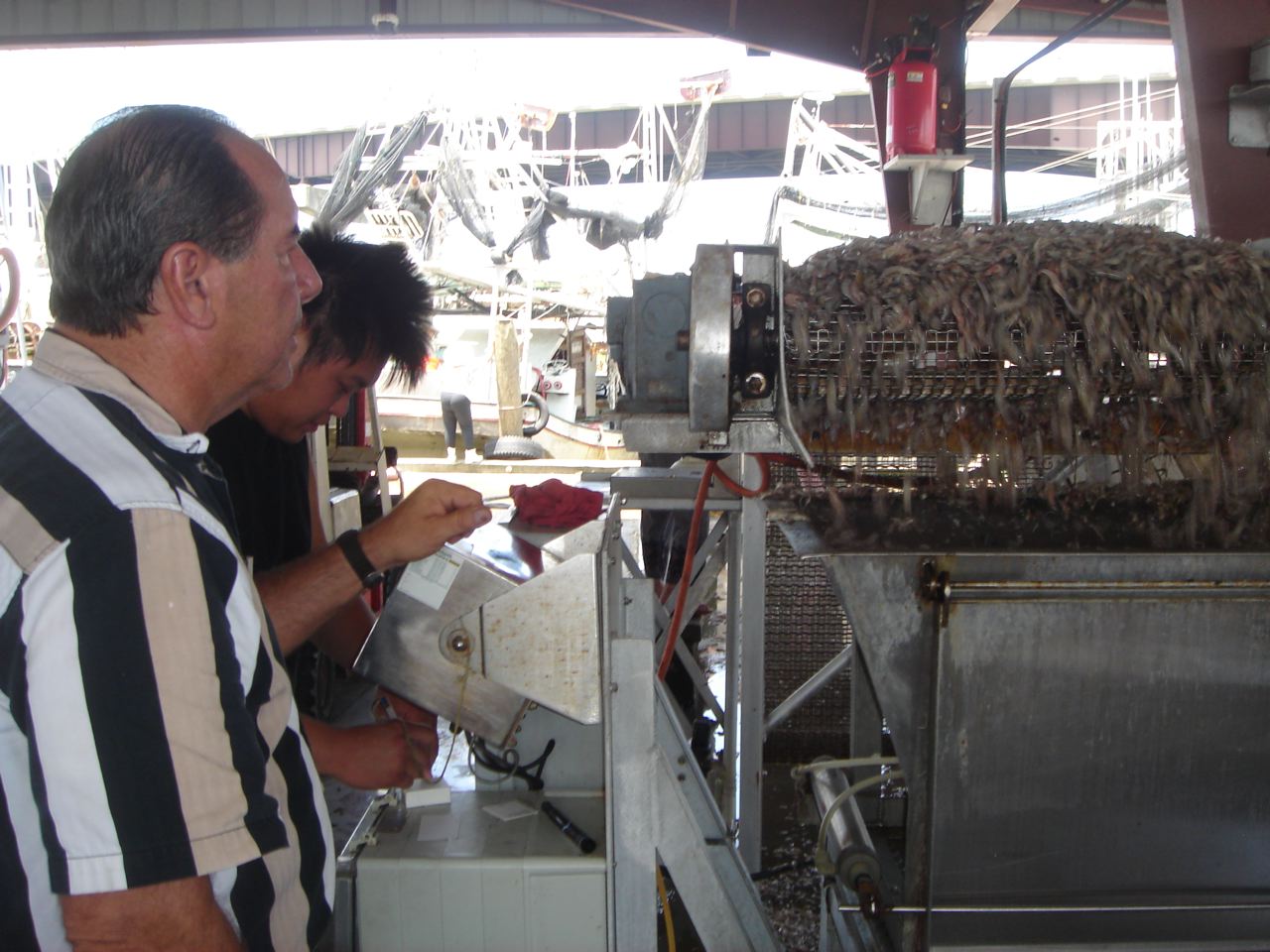
“I was born and raised in surroundings and atmosphere most people can only dream of,” says E.J. Otero, the dock manager of Ocean Shrimp LLC, which is nestled in a backwater alongside the Bay Adams bridge in Empire, Louisiana. “You just wake up one morning and everything you know is gone.” Gone since the oil spill is 80 percent of his business, buying shrimp and packing them in trailers to be hauled to processing plants. Not only are there fewer places to shrimp, but many of the shrimpers are using their boats to help however they can to contain the oil. When he first heard about the disaster, Otero thought it wouldn’t affect the business, that it would be quickly closed and everything would be fine. Now he waits, living day to day with great apprehension over the increasing closure of viable places to shrimp. “This is pushing all the boats into one area, they’re corralled in one spot and wiping the shrimp out.”

The grandson and son of fishermen and a former fisherman himself, Otero has been running the dock here for 30 years. “Where do I go to find a job at 59?” he laments. “This is what I do. This is what I know. This is what I
want to do.”  He wonders about the long-term effects of the disaster, and whether there will be a shrimping season next year – or even in ten. He goes up the food chain of all the animals that will be harmed by the contamination of the wetlands, even the alligators who eat the birds who eat the fish who …and on and on. “To have everything become a black cloud,” he says, “I feel cheated out of the rest of my life. With no light at the end of the tunnel, they might as well close the door on Southern Louisiana. Because that’s what it’s all about: sportsman’s paradise.”


-Claire Layrisson